Delta-neutral between two Perp DEXs
A long on one Perp DEX, a short of the same size on another: the foundation of farming strategies. Choosing your two legs, setting leverage, watching liquidation and ADL, with a worked example.
The essentials
This content is general information, not investment advice. Neutral to price doesn't mean risk-free.
The principle
You buy 1 ETH as a perp on platform A and sell 1 ETH as a perp on platform B. If ETH rises 10%, the long gains what the short loses. Your price exposure is zero: your delta is said to be neutral.
What's left are the fees, each leg's funding and the volume generated on each platform. On a Perp DEX that distributes points, that volume and those open positions are exactly what pays.
This setup is different from the classic "long spot, short perp" delta-neutral described in our guide on the basis trade, which mainly aims to collect funding.
The two setups
Starter version: one DEX and one centralized exchange
The long on the Perp DEX you're farming, the identical short on a centralized exchange. The DEX leg earns the points, the CEX leg neutralizes the price. It's simple, but only one leg is working for you.
Most profitable version: two DEXs to farm
Both legs on two Perp DEXs that each have a points or rewards program. You stack two programs with the same capital. You can also put the long where funding is lowest and the short where it's highest, to get paid while you farm. A widely used example: Robinhood x Lighter on one side, Variational on the other.
The same account can't be long and short on the same asset on the same platform: the two positions would cancel out. So you always need two platforms.
Our current plan: SanDisk between Arcus and Entropy
A SanDisk long on one, a SanDisk short of the same size on the other (io:SNDK on Entropy). Put the long where funding is lowest and the short where it's highest. You farm both programs of our current duo without being exposed to the price. The step-by-step is in our guide The SanDisk delta-neutral: Arcus + Entropy.
Choosing your two legs
- The same asset on both sides, with enough liquidity to get in and out without slippage.
- Two worthwhile programs: check our current ranking.
- Funding: compare it before opening. Tools like VOOI's Arbitrage Desk, PerpHub's or Loris Tools show the gaps between platforms.
- Fees: if possible, put the leg that generates the most volume on the platform with the lowest maker fees.
Setting size and leverage
- Same notional size on both legs, not the same amount of margin.
- Account leverage between 1x and 2x. Don't go beyond 2x to 2.5x in cross margin.
- A USDC reserve outside both platforms, to top up the losing leg's margin without closing everything.
- Each leg's liquidation price, written down before opening.
Executing
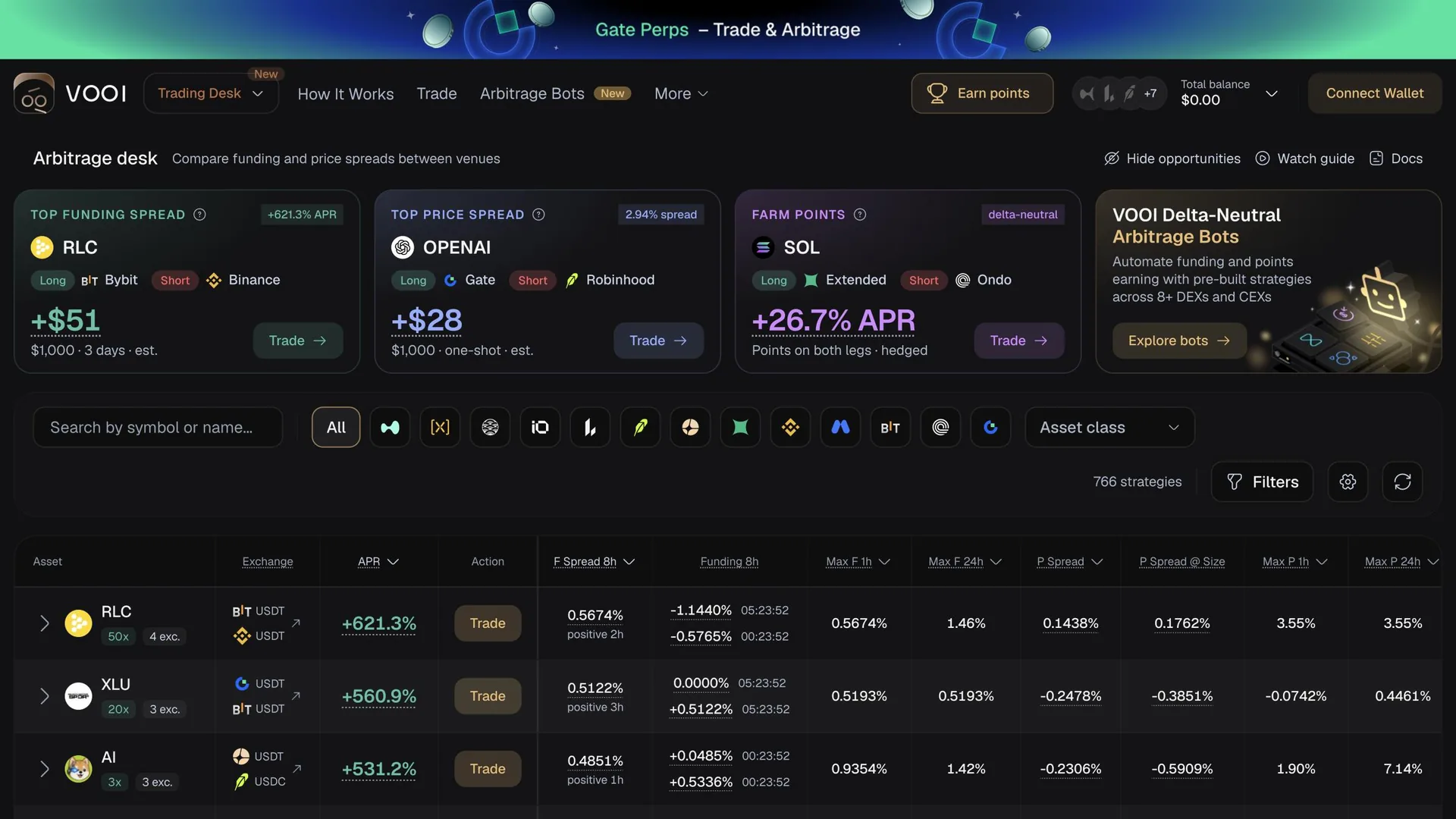
Both legs must be opened almost at the same time, otherwise you're exposed to the price between the two orders. Three ways to do it:
- By hand: open the first leg with a limit order (maker), then the second with a market order as soon as the first is filled.
- With VOOI: the Arbitrage Desk opens both legs in one click, in Taker-Taker or Maker-Taker mode. See our VOOI guide.
- With Tread: the delta-neutral bot opens both legs via TWAP, over a maximum of one day. It flags the position as unbalanced when net exposure exceeds 1%.
Monitoring
Check your positions two to three times a day. When the price moves sharply, the losing leg gets closer to liquidation while the other builds up unrealized gains on another platform. You then need to withdraw part of the gain on one side to top up the margin on the other, which takes time. That's why leverage has to stay low.
A worked example
You have $5,000. You deposit $2,500 on each platform and open a $5,000 ETH long on A and a $5,000 ETH short on B. Each leg is at 2x, and so is your overall account leverage.
- ETH rises 20%: the long gains $1,000, the short loses $1,000. Your overall balance doesn't move, but the short's margin drops to $1,500. Transfer part of the gain from A to B.
- The short's liquidation would happen around +45% to +50% depending on the platform's maintenance margin. At 10x, it would come as early as +8% to +9%.
- Fees: opening and then closing both legs amounts to $20,000 of volume. Depending on the platforms and order type, that costs between $0 and about ten dollars.
- Funding: it's collected or paid every hour on Hyperliquid and many Perp DEXs. Over several weeks, it can earn or cost more than the fees.
Funding arbitrage
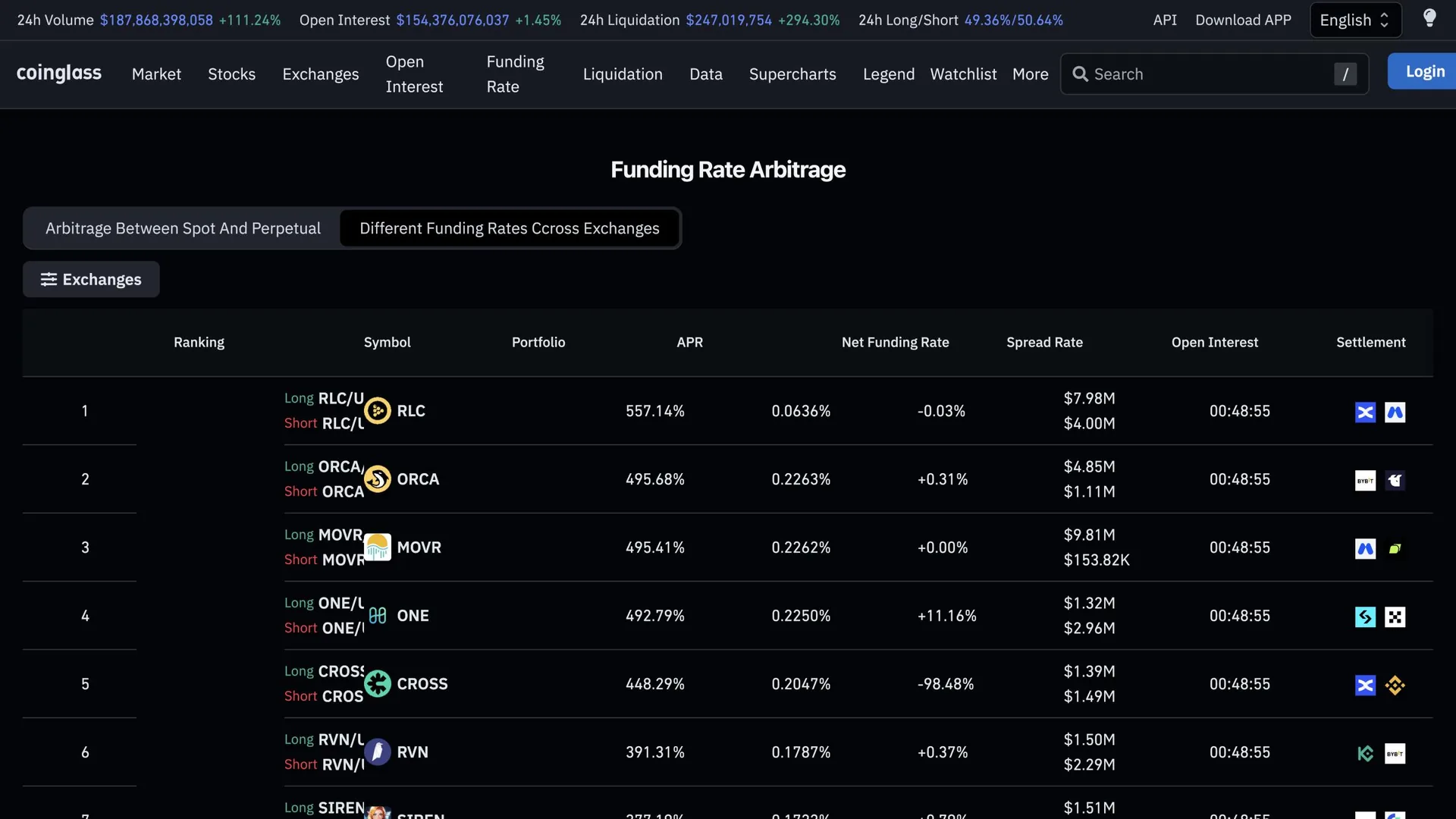
When the funding gap between two platforms is wide, the delta-neutral can earn on top of the points. Two rules of caution:
- Funding changes fast: a one-day gap says nothing about the following week.
- Skip it if a market order's slippage exceeds about 0.12%: entering and exiting would cost more than you hope to collect.
What "neutral" doesn't cover
One leg getting liquidated
Each leg has its own margin and its own liquidation price. If one is liquidated, the other stays open on its own, and you're 100% exposed to the price.
Auto-deleveraging (ADL)
On Hyperliquid and platforms that use the same mechanism, when a liquidation leaves an account negative, the platform forcibly closes the most profitable and most leveraged opposite positions. Your winning leg can be closed without warning, leaving the other one uncovered. Check your positions after every violent move.
Platform risk
A platform that goes down, gets hacked or blocks withdrawals breaks the hedge. Don't put more on one leg than you're willing to lose.
The price gap between legs
The two prices are never identical. When you close, that gap can work against you.
Mistakes to avoid
- Raising leverage to generate more volume with the same capital.
- Opening one leg and waiting before opening the other.
- Not keeping a reserve to top up a margin.
- Forgetting an open leg after closing the other.
- Making quick round trips between your own accounts: that's wash trading, filtered out by points programs (see our guide on multi-accounts).